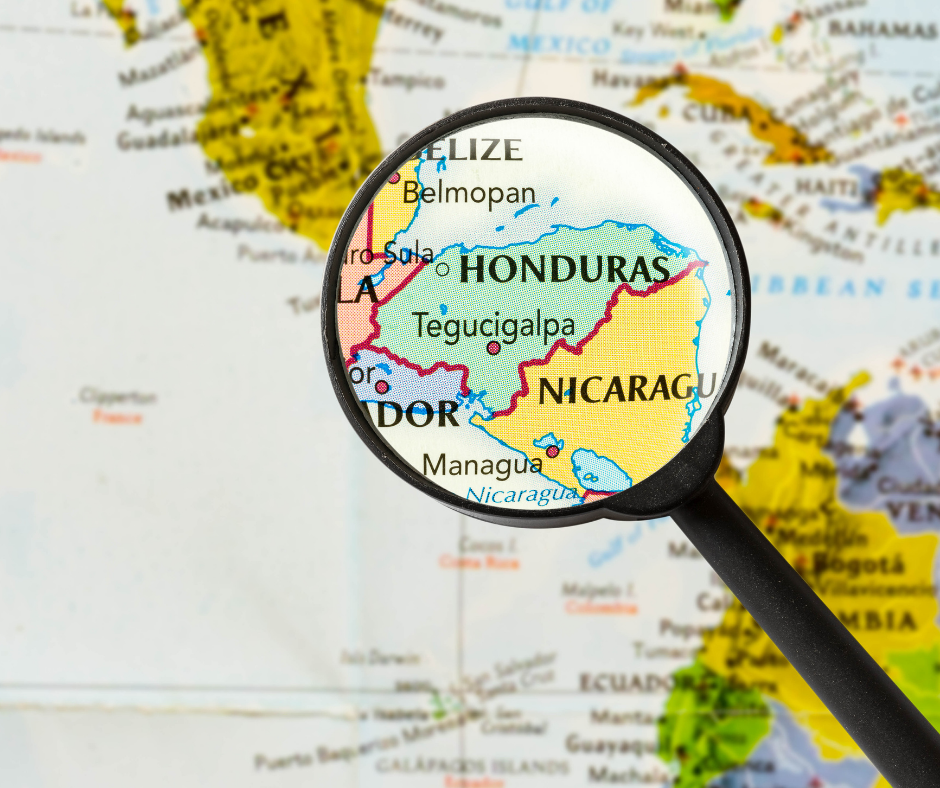
Honduras
Honduras is one of the poorest countries in Central America, and human rights—particularly children’s rights—are often violated there.
Honduras faces numerous problems, such as youth violence often linked to maras (gangs), the commercial exploitation of children, child trafficking for sexual exploitation, and child migration. Violence in Honduras is sometimes extreme, to the point where it is common for children to be murdered. These are known as extrajudicial, summary, or arbitrary executions. The perpetrators of these murders usually remain unknown and unpunished. From February 1998 to February 2023, 14,295 children and young people under the age of 23 were murdered or subjected to extrajudicial executions (CAH’s Observatory on the Rights of Children and Youth in Honduras, 2023).
Between January and August 2024, the U.S. Border Patrol intercepted 36,658 Honduran migrant children, while 39,632 migrants (26% of whom were children) were forcibly returned to Honduras. Many of those returned have expressed their intention to migrate again, due to the continuing deterioration of living conditions in the country (UNICEF, 2025).
The socioeconomic situation is also alarming, as in 2025, 60.1% of the Honduran population lived below the poverty line (World Bank, 2025).
Honduras is facing a complex humanitarian crisis, fueled by structural poverty, inequality, violence, and climate-related shocks. Many communities face serious difficulties in accessing basic services and struggle to fully exercise their rights amid persistent social and political instability. The country has the highest rates of homicide and femicide in Central America. Violence takes many forms: gender-based violence, forced displacement, extortion, the recruitment of children by armed groups, and destruction of property (UNOCHA, 2025).
According to recent estimates, nearly 16% of the Honduran population is in need of humanitarian assistance. In 2025, this represents approximately 1.6 million people out of a total population of 10.8 million, with marginalized groups being the hardest hit (UNOCHA, 2025).
More information: https://data.unicef.org/country/hnd/