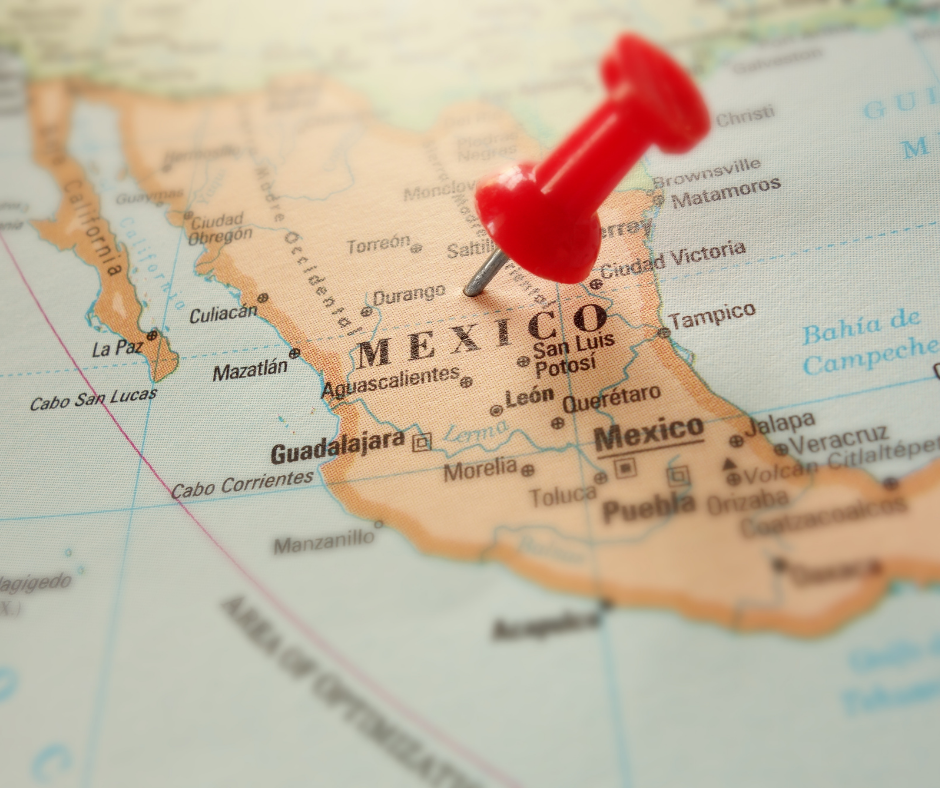
Mexico
Mexico is the most populous Spanish-speaking country in the world. Its economic growth has now placed it among upper-middle-income countries. However, inequality and social exclusion persist.
In fact, in 2024, 29.6% of the population lived below the poverty line—approximately 38.5 million people—and 5.3% lived in extreme poverty, representing about 7 million people.
Furthermore, the country is severely affected by violence, which does not spare children. In 2025, Mexico recorded a homicide rate of 17.5 per 100,000 inhabitants (Government of Mexico, 2026).
Violence particularly affects children. In 2024, Mexican authorities identified 860 victims of human trafficking, including 343 victims of sex trafficking and 75 victims of forced labor (U.S. Embassy in Mexico, 2025). Mexican children are exposed to the worst forms of child labor, particularly in commercial sexual exploitation and drug production (U.S. Department of Labor, 2024).
In the first half of 2024, Mexican immigration authorities recorded 13,737 repatriations of Mexican children from the United States, already exceeding the annual total for 2020 (Immigration Authorities, Mexico, 2025). Between January and August 2024, 25,688 Mexican children and adolescents were returned from the United States to Mexico, of whom 10,418 (40.6%) were unaccompanied (UNICEF, 2025).
Mexico remains a major transit country for migrants from Latin America as well as other regions of the world, particularly Africa. In 2024, Mexican authorities observed a sharp increase in child migration: the number of children in migration situations rose by 514% compared to 2018, illustrating the intensification of the flow of children moving through Mexican territory.
More information: https://data.unicef.org/country/mex/